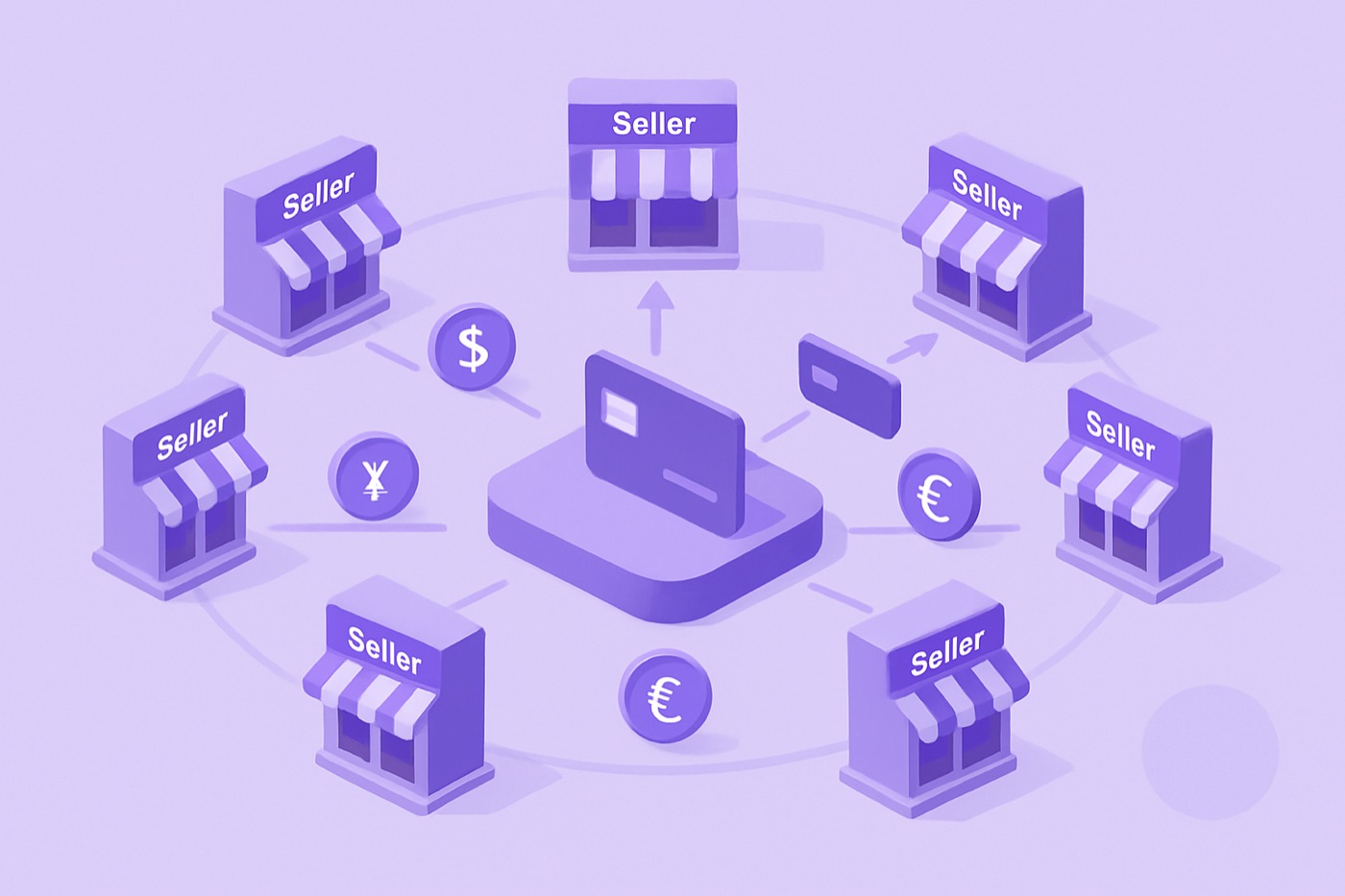
Standard payment gateways are built for one merchant collecting card payments. Marketplaces and platforms break that model: money flows both ways, and payouts happen at volume. The provider you choose needs explicit support for batch payouts, API-triggered disbursements and platform-scale reporting – or it becomes your bottleneck.
Key takeaways
- Marketplaces break the single-merchant model: you collect from buyers and distribute to sellers, often at high volume.
- Batch payout capability is non-negotiable above a certain size – manual transfers are a liability, not a workflow.
- The most efficient platforms automate payouts entirely via a well-documented disbursement API.
- Embedded payments for sub-merchants is a distinct capability from basic payouts – ask about it specifically.
- Demand a transparent per-payout fee and a single dashboard showing processed, pending and failed payouts.
Imagine you’ve built a marketplace connecting 80 freelancers with clients across Southeast Asia. Business is growing. Every week, dozens of projects get completed – and dozens of payouts need to go out.
In the beginning, you handled it manually. Checked completed jobs on Monday, transferred money one by one via bank transfer on Tuesday. By Wednesday, half the freelancers had messaged asking where their payment was.
This is the moment most marketplace founders realise that standard payment gateways – the ones designed for a single merchant accepting card payments – aren’t built for their business model.
Here’s what to look for when you’re evaluating payment infrastructure for a marketplace or platform.
The Core Problem With Standard Payment Gateways
Most payment providers are designed around a simple model: one merchant, many customers. Money flows in one direction – from the customer to you.
Marketplaces and platforms break this model in two ways:
- Money flows both ways. You collect from buyers and distribute to sellers, freelancers, contractors, or partners. Sometimes in the same transaction cycle.
- You’re operating at volume. As the platform grows, payouts happen constantly – often hundreds or thousands per month. Manual processing doesn’t scale.
A provider that doesn’t have explicit support for payouts, disbursements, or platform-scale operations is going to become a bottleneck.
What to Look For: The Platform Payment Checklist
Batch Payout Capability
The ability to process many payments in a single operation is non-negotiable for platforms above a certain size. Manually triggering individual transfers for each seller is not a workflow – it’s a liability.
Ask any provider: can I upload a list of recipients and amounts and process them as a batch? If the answer involves manual steps or no clear batch tooling, move on.
API-Triggered Disbursements
Beyond batch uploads, the most efficient platforms automate payouts entirely via API. When a seller completes an order and the platform’s conditions are met, the payout is triggered automatically – no human in the loop.
This requires a payment provider with a clear API endpoint for disbursements, well-documented authentication and error handling, and a predictable per-payout fee structure so you can model the cost into your platform economics.
ONE Payments supports both batch payouts and API-triggered disbursements – meaning platforms can automate the payout layer rather than treating it as an ongoing manual process. See how ONE Payments handles platform payments.
Embedded Payments for Sub-Merchants
Some platforms want to go further: not just paying out to sellers, but allowing sellers to accept payments through the platform itself. This is embedded finance – and it’s a different capability from standard payouts.
If your roadmap includes letting sub-merchants collect payments through your platform, ask specifically about embedded payment tools. This is a distinct product from basic payout infrastructure.
Transparent Fee Structure at Scale
When you’re processing payouts at volume, fee predictability matters as much as fee size. A provider charging USD 2 per local transfer and USD 28 for a SWIFT transfer is more useful than one that gives you a “competitive rate” with no specific numbers attached.
Model your payout mix before you evaluate pricing: How many payouts per month? What’s the split between local and international recipients? What currencies are involved? With those numbers, you can calculate the actual monthly cost for any provider being considered.
A Single Dashboard Across the Whole Platform
As volume grows, visibility becomes critical. You need to see – in one place – which payouts have been processed, which are pending, which failed and why. Reconciling payment data from multiple systems is hours of work that your operations team shouldn’t be spending.
Ask to see a demo of how payout reporting works in practice. Can you filter by date, recipient, status, currency? Can you export in a format your accounting system can read?
Questions to Ask Any Payment Provider
Before committing to a provider for a marketplace or platform, run through these directly:
- Do you support batch payouts? If yes, how many recipients per batch?
- Can payouts be triggered via API? What does the endpoint look like?
- What’s the per-payout fee? For local transfers and international?
- Do you support embedded payments for sub-merchants?
- What currencies can recipients be paid in?
- What happens when a payout fails? Is there automatic retry? How are failures surfaced?
The quality and specificity of the answers will tell you a lot about whether the provider has actually built for platform use cases or is just accommodating them reluctantly.
Scaling Without Surprises
The businesses that build scalable marketplace payment infrastructure tend to have one thing in common: they thought about payouts before they needed them, not after they became a problem.
If you’re building or growing a marketplace or platform and want to understand how ONE Payments handles payout infrastructure – batch, API, and multi-currency – the clearest path is a direct conversation with the team.
Talk to ONE Payments about your platform